
Psychic Phenomena
How experimenters influenced participants in the ganzfeld parapsychology experiment
A study looks at how researchers spoke to people during a ganzfeld test, where a sender tries to pass an image to a receiver. Paranormal Country has not confirmed the result.
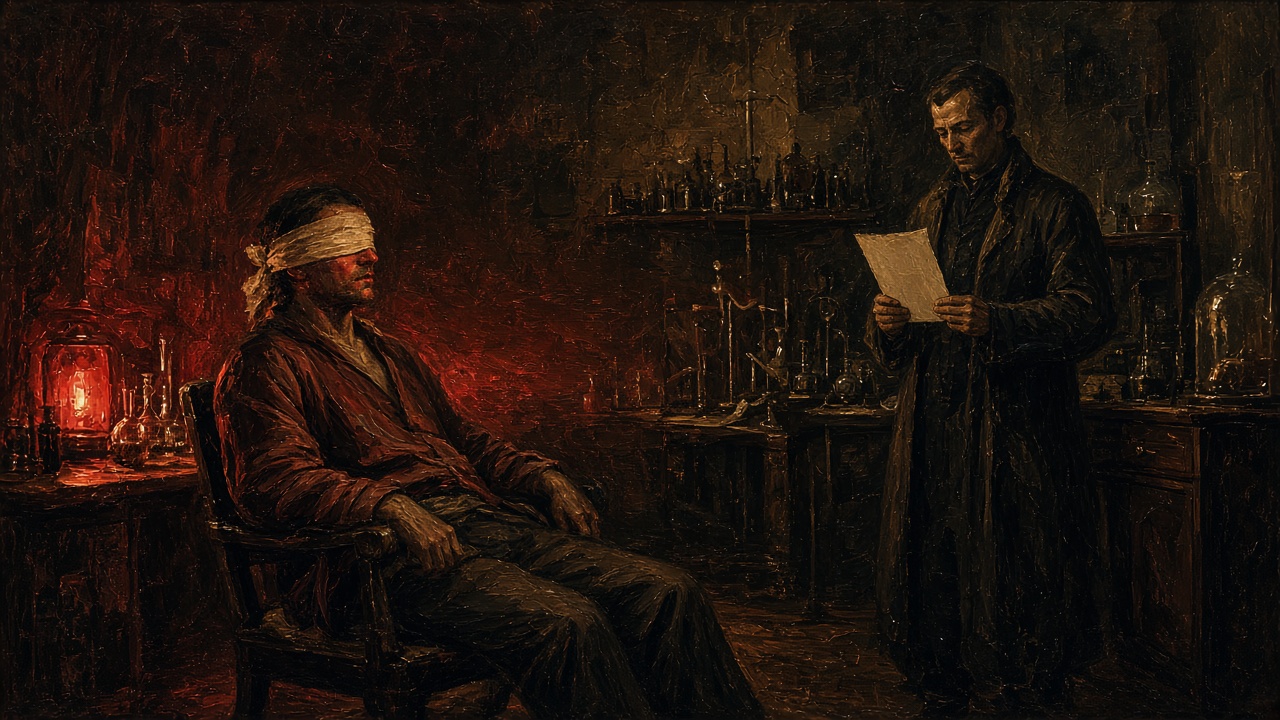
A recent analysis of ganzfeld parapsychology experiments has raised questions about the influence of researchers on participants. Ganzfeld experiments are designed to test the ability of a 'sender' to project images from a video clip to a 'receiver' who is isolated in a sound-proof room, blindfolded, and incubated. The 'receiver' then reports the images they believe they are perceiving to a researcher, who documents their responses. Following this, the researcher reviews the reported images with the 'receiver' before the latter attempts to identify the correct video clip from a selection of decoys.
The study, conducted by Robin Wooffitt, focused on recordings from experiments held at the Koestler Parapsychology Unit in Edinburgh during the mid-1990s. Wooffitt's analysis revealed that researchers tended to respond to the 'receivers' in two distinct ways during the image review stage. This interaction may have influenced the outcomes of the experiments, suggesting that the dynamics between experimenters and participants could play a significant role in the perceived success of such parapsychological tests.
The ganzfeld experiment has been a staple in parapsychological research, often cited as a method for exploring potential extrasensory perception (ESP). However, the findings from Wooffitt's analysis highlight a critical aspect of experimental psychology: the potential for researcher bias or influence. This raises further questions about the validity of results obtained in such settings, where the subjective experience of the 'receiver' may be swayed by the expectations or reactions of the researcher.
The implications of this study could extend beyond the realm of parapsychology, prompting a reevaluation of how participant-researcher interactions are managed in various psychological experiments. It emphasizes the need for greater awareness of the subtle ways in which researchers can unintentionally shape the responses of their participants.
As the field of parapsychology continues to grapple with issues of replicability and scientific rigor, Wooffitt's findings serve as a reminder of the complexities involved in studying phenomena that challenge conventional scientific understanding. The British Psychological Society, which published the original report, has not confirmed the broader implications of these findings, leaving the door open for further investigation into the dynamics of ganzfeld experiments and similar studies.
While the ganzfeld experiments have historically been associated with claims of ESP, the influence of experimenters on participant responses raises important questions about the integrity of such claims. As researchers delve deeper into the mechanics of perception and consciousness, the interplay between expectation, suggestion, and the subjective nature of experience remains a vital area of inquiry.
Image: Paranormal Country · Source: bps.org.uk