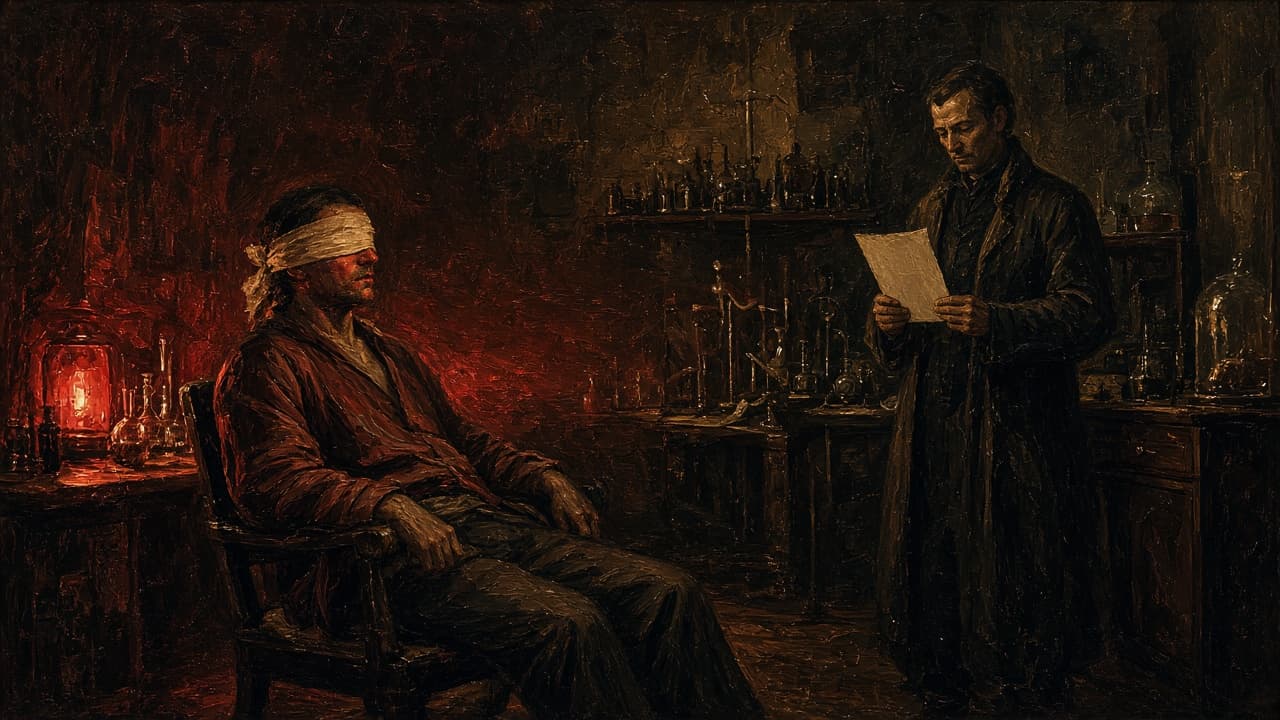
An Army veteran's claim has reignited interest in the government's history with remote viewing, a controversial practice and CIA project. A viral claim that the CIA searched consumer DNA databases for alien-human hybrids has pulled one of the military and intelligence community’s strangest Cold War-era programs back into the spotlight: remote viewing, described as psychic spying.
The claim centers on Jason Reza Jorjani, a philosopher and author who said on the American Alchemy podcast that Army veteran Lyn Buchanan told him that the CIA had explored 23andMe and Ancestry.com data to identify people with alleged extraterrestrial DNA. The allegation has not been verified through public documents, but the story landed at a moment when several real issues are already merging together: renewed public interest in unidentified anomalous phenomena (UAPs), the government’s documented history with remote viewing, and concerns about what happens to private genetic data once people hand it to private companies.
Lawmakers on Capitol Hill have openly pushed field experts to testify about such phenomena, which recently led to the Trump administration opening a new government UFO portal, releasing declassified records, videos, photos and documents tied to unexplained aerial encounters. Military.com reached out for comment on Saturday to the White House, CIA, Pentagon, 23andMe, Ancestry, Jorjani and Buchanan.
Jorjani claimed Buchanan told him that former CIA analyst Christopher “Kit” Green had devised a way to access 23andMe and Ancestry.com to screen users for a specific “genetic variance” linked to nonhuman beings. The New York Post reported that Green was involved in the government’s remote-viewing program in the 1970s but left the CIA long before either 23andMe or Ancestry.com existed.
The more outlandish parts of the story involve alleged “Nordics,” described in the reports as tall, blond, blue-eyed extraterrestrial beings supposedly living in small towns in the Colorado Rockies. Buchanan, according to Jorjani’s account, allegedly said those beings approached him for help in avoiding CIA detection. Buchanan has previously warned against submitting DNA to consumer genealogy companies, according to the Post, which cited a 2023 podcast appearance in which he referred to the “other” or “unknown unidentifiable” portion of some ancestry breakdowns and said “government people” were looking into it.
No public evidence has surfaced showing that the CIA searched consumer genealogy databases for extraterrestrial markers. The CIA’s Reading Room includes a “Star Gate Project” overview describing remote viewing research that came to the CIA’s attention before the agency provided funding to Stanford Research Institute for additional research. Remote viewing refers to the claimed ability to describe distant people, places or events without using ordinary senses.
Another CIA-hosted review described Star Gate as a defense intelligence agency program involving paranormal phenomena, primarily remote viewing, for intelligence purposes. The program is often associated with a cluster of earlier government efforts, including Grill Flame and Center Lane, some of which were connected to Army intelligence activity at Fort Meade, Md.
That history helps explain why Buchanan’s name matters in the current viral claim. He has long been associated with the remote viewing community and has described himself as having served in a military remote viewing unit. The leap from remote viewing to alien DNA, however, is a very large one, and the public record does not support it.
The Pentagon’s All-domain Anomaly Resolution Office continues to collect and review UAP reports. Congress has shown persistent interest in government transparency on the issue, and earlier releases of declassified material have kept disclosure-focused communities closely watching for new information. WIRED reported that the White House launched Aliens.gov after teasing the site on X with a short video captioned “They walk among us,” which led some users to expect a UFO-related announcement. Instead, the site debuted as an immigration-focused page. WIRED also reported that the Executive Office of the President registered the website in March, after Trump had promised to release new information about UFOs.
Consumer DNA privacy has been in the news for more grounded reasons. California sued 23andMe this week over the company’s 2023 data breach, which affected nearly 7 million people, according to The Associated Press. The lawsuit followed earlier scrutiny of 23andMe’s bankruptcy and the handling of customer genetic data during the sale process.
That real privacy concern gives the alien-DNA claim a sturdier launchpad than it would otherwise have. Many people may not believe in hidden alien hybrids. Plenty of them do worry about who can access genetic data. The Pentagon’s current public position remains unchanged: it has not found evidence that UAP cases prove alien activity or technology. A 2024 historical report from the All-domain Anomaly Resolution Office reviewed U.S. government involvement with UAPs dating back decades and found no indications of extraterrestrial technology in the programs it examined.
The AP reported in 2024 that a Pentagon UAP report cataloged hundreds of new incidents, although it found none that suggested extraterrestrial origin. Some cases remained unexplained due to insufficient information, but the report did not identify any alien activity. That does not mean every UAP report has been solved. It means the government has not publicly verified the central claim that any case involves extraterrestrial technology, much less extraterrestrial DNA. The alien-hybrid portion of the story is unsupported, but the privacy questions around consumer DNA databases are real. 23andMe says it closely scrutinizes law enforcement requests for data.
Image: Paranormal Country · Source: military.com